%20(1).png)
Container Gardening (General)
Expert guides on every fertilizer we carry, step-by-step crop growing instructions, and the science behind healthy soil.
Crop Overview
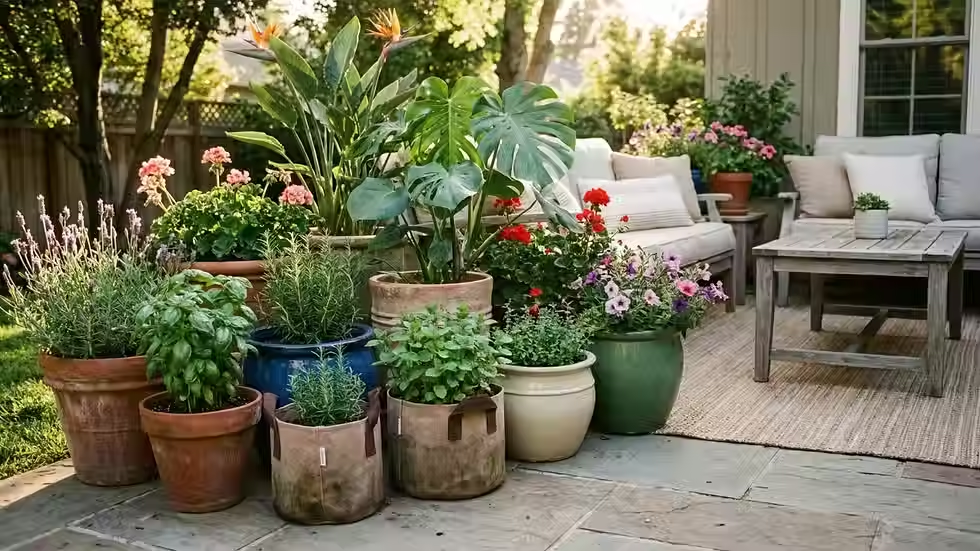
Container gardening creates a unique nutritional micro-environment fundamentally different from in-ground growing because the plant's entire root system is confined to a small volume of soilless media that has no connection to the mineral soil reservoir that ground-planted crops draw from. This means every nutrient the plant needs must be supplied through the potting mix and supplemental fertilization — nothing comes for free from the surrounding earth. The most important factor in container nutrition is understanding that soilless potting mixes are essentially nutritionally inert starter media designed for drainage and root aeration, not fertility. Most quality mixes include a modest charge of slow-release fertilizer (typically 3-4 weeks' worth), after which the container gardener must take over complete nutritional responsibility. The three critical container-specific challenges are nutrient leaching (every watering pushes soluble nutrients out the drainage holes), salt accumulation (fertilizer salts concentrate in the limited soil volume, especially during hot weather when evaporation exceeds drainage), and pH drift (soilless media buffers poorly, and repeated fertilization with ammonium-based nitrogen gradually acidifies the mix). The solution to all three challenges is the same: frequent, dilute fertilization rather than infrequent heavy doses. A half-strength application with every watering maintains consistent nutrient levels, prevents salt spikes, and allows the gardener to observe plant response and adjust before deficiencies or toxicities develop. Container vegetables (tomatoes, peppers, herbs) need more aggressive feeding than ornamentals, typically requiring water-soluble fertilizer at every watering once fruiting begins. The single most valuable container gardening investment is a quality potting mix — cheap mixes with poor drainage create problems that no fertilizer program can overcome.
How to Apply ?
Seedling
For newly potted plants, the initial charge of slow-release fertilizer in quality potting mix provides 3-4 weeks of nutrition; begin supplemental liquid feeding at quarter strength after two weeks and increase to half strength as plants establish.
Vegetative
During active growth, apply balanced water-soluble fertilizer (10-10-10 or 20-20-20 at half strength) with every other watering; monitor for salt buildup by checking for white crusty deposits on the soil surface or pot rim.
Flowering
For flowering plants, shift to a formula with higher phosphorus and potassium (such as 15-30-15) to promote bloom production; for fruiting vegetables, increase potassium and add calcium to prevent blossom end rot.
Fruiting
Container vegetables during fruiting are at peak nutrient demand; feed at every watering with a complete fertilizer plus calcium supplement; flush containers monthly with plain water to dissolve accumulated fertilizer salts.
Common Mistakes
Using garden soil in containers which compacts, drains poorly, and introduces weed seeds and soil-borne diseases into the confined container environment|Fertilizing at full strength which creates salt concentration in the limited soil volume, burning roots and causing leaf edge browning|Allowing drainage saucers to remain full of water which creates waterlogged conditions where roots cannot absorb nutrients regardless of fertilization|Assuming the slow-release fertilizer in new potting mix will last all season — it typically provides only 3-4 weeks of nutrition|Neglecting to flush containers periodically with plain water to dissolve accumulated fertilizer salts that build up over the growing season
Organic Options
Wicked Organics Container Blend is specifically formulated for the unique demands of container growing. Mix worm castings at 15-20% by volume into potting soil for sustained gentle nutrition. Fish and kelp emulsion (2-3-1) applied weekly provides complete organic nutrition. Compost tea brewed with worm castings delivers both nutrients and beneficial biology to the container ecosystem.
Nutrient Deficiency Signs
Nitrogen
Lower leaves turn uniformly yellow and drop, new growth is pale and small, overall plant appears stunted and thin, and flowering or fruiting production declines dramatically.
Phosphorus
Leaves develop purplish discoloration on undersides and stems, root development is restricted (plant pulls easily from the pot), flowering is delayed, and fruit set is poor on vegetable crops.
Potassium
Leaf margins develop brown crispy edges progressing inward, fruit quality is poor (soft tomatoes, thin-walled peppers), disease susceptibility increases, and plants wilt easily even when watered.