%20(1).png)
Lettuce & Salad Greens
Expert guides on every fertilizer we carry, step-by-step crop growing instructions, and the science behind healthy soil.
Crop Overview
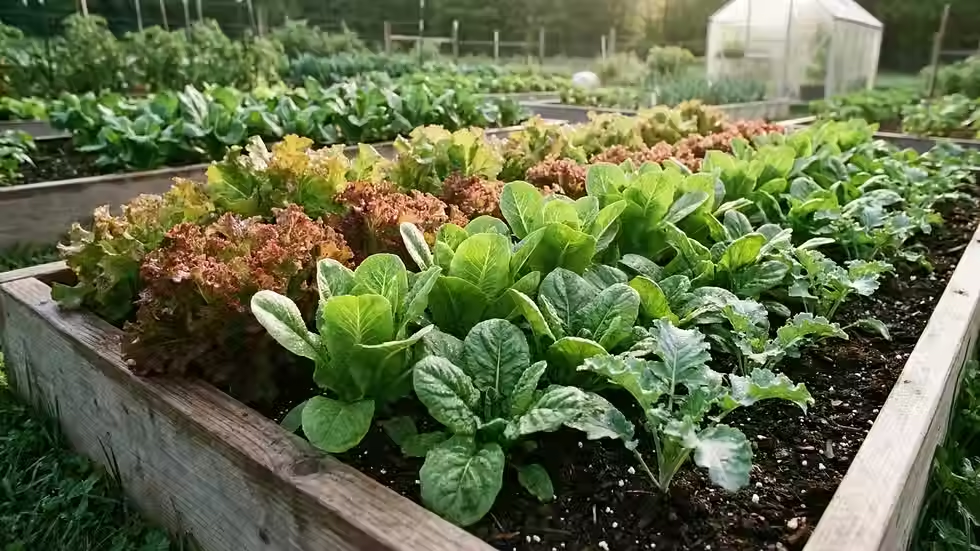
Lettuce and leafy salad greens — including leaf lettuce, romaine, butterhead, kale, spinach, Swiss chard, and arugula — are among the most nitrogen-hungry crops in the garden because their entire harvested product is vegetative leaf tissue. Unlike fruiting crops where nutrition shifts from nitrogen to phosphorus and potassium at flowering, lettuce and greens benefit from consistently available nitrogen throughout their rapid 30-60 day growing cycle. The ideal NPK ratio emphasizes nitrogen at roughly a 3:1:2 pattern (such as 12-4-8), which promotes the lush, rapid leaf expansion that produces tender, flavorful salad crops. However, the nitrogen source matters significantly for lettuce quality. Ammonium-based nitrogen sources can contribute to tip burn — the crispy brown edge discoloration that ruins entire heads — because ammonium interferes with calcium uptake. Calcium nitrate is the preferred nitrogen source for lettuce production, simultaneously providing nitrogen and the calcium essential for crisp, tip-burn-free leaves. The short growing cycle of most lettuce varieties means pre-plant soil preparation with compost and organic amendments often provides most of the nutrition needed, with one or two light side-dressings as insurance. Lettuce is also an excellent candidate for succession planting every 2-3 weeks for continuous harvest, and New England's cool spring and fall seasons provide ideal growing conditions — the crop actually benefits from temperatures that would stress warm-season vegetables. Soil organic matter is particularly important for lettuce because it retains moisture in the root zone; inconsistent watering stress triggers bolting (premature flowering) which makes leaves bitter.
How to Apply ?
Seedling
Work 1-3 inches of compost into the top 6-8 inches of soil before sowing; for direct-seeded lettuce, a light pre-plant application of balanced fertilizer (10-10-10 at 2 lbs per 100 sq ft) provides early nutrients as seedlings establish.
Vegetative
Side-dress with nitrogen-rich fertilizer when plants reach 3-4 inches tall, placing fertilizer in a shallow groove 4-6 inches from the row; prefer calcium nitrate or fish emulsion over ammonium-based sources to prevent tip burn.
Flowering
Flowering (bolting) is undesirable in lettuce and signals the end of harvest quality; bolting is triggered by heat and long days, not nutrition, but stressed plants from poor nutrition bolt sooner than well-fed ones.
Fruiting
N/A — lettuce is harvested as a vegetative crop before flowering; plan succession plantings every 2-3 weeks for continuous harvest rather than trying to extend a single planting beyond its quality window.
Common Mistakes
Using ammonium-based nitrogen fertilizer which interferes with calcium uptake and causes tip burn — the most common lettuce quality defect|Over-fertilizing which promotes excessively rapid soft growth that is more susceptible to disease and pest damage|Neglecting soil moisture consistency which triggers bolting (bitter flowering) faster than any nutritional deficiency|Applying fertilizer too close to harvest day which can leave residue on leaves and affect flavor|Growing lettuce in full summer heat when no amount of fertilizer can prevent heat-induced bolting and bitterness
Organic Options
Wicked Organics Garden Blend provides gentle balanced nutrition ideal for the quick lettuce cycle. Fish emulsion (5-1-1) at half strength every 2-3 weeks is the classic organic nitrogen boost for leafy greens. Blood meal (12-0-0) provides a concentrated nitrogen source when worked into beds before planting. Compost tea applied as a foliar spray or soil drench delivers micronutrients and beneficial biology.
Nutrient Deficiency Signs
Nitrogen
Plants are pale yellow-green with stunted growth, older leaves yellow first and may develop brown tip burn, leaves are thin and tough rather than tender, and heads fail to size up properly.
Phosphorus
Leaves appear darker green than normal with a possible purplish tint on undersides and stems, growth is stunted, older lower leaves develop brown spots and dead patches, and plants may stop growing entirely.
Potassium
Leaves are small and dark green with a compact appearance, margins develop brown scorched edges, leaves curl downward, and overall plant looks stunted despite adequate nitrogen and water.